11 Customer Onboarding Best Practices to Engage and Retain
Last updated on Fri Mar 27 2026
About 90% of companies lose potential customers during onboarding. This is often due to confusing processes, unclear instructions, poor communication, or delays that prevent customers from quickly experiencing value.
Onboarding is key to boosting customer retention because it helps customers quickly understand how to use a product or service, builds confidence early in the relationship, and ensures they see meaningful results as soon as possible. In this guide, we'll break down customer onboarding best practices to help you create a smoother experience for new customers, reduce churn, and build stronger long-term relationships.
1. Set clear expectations from the start
Setting clear expectations from the start means defining what your business hopes to achieve during the onboarding process. This may include goals like helping customers reach their first success milestone, completing setup steps, or adopting key features of a product or service.
Establishing these internal expectations helps teams design a focused onboarding experience that moves customers toward meaningful outcomes. Without clear goals, onboarding can become inconsistent, making it harder to measure success or identify areas for improvement. Businesses with clear objectives are better positioned to guide customers effectively and ensure the onboarding process contributes to long-term retention and satisfaction.
2. Create a simple and structured onboarding process
Creating a straightforward onboarding process involves first understanding the specific actions customers must take to experience your product’s value. Businesses should identify the essential setup steps, information customers need, and the first milestones that signal progress.
Organizing these tasks in a clear, logical order makes the onboarding journey easier to follow and reduces the risk of customers feeling overwhelmed. When the process is simple and structured, customers can move forward with confidence and reach early success faster.
Using tools like checklists, workflows, or onboarding roadmaps can make this process easier to follow. These tools outline each step, clarify responsibilities, and help both teams and customers track progress. They also ensure important steps are not missed, creating a more consistent onboarding experience.
3. Automate your welcome flow to build trust from day one
An automated welcome flow helps build trust and engagement from the very first interaction. A well-designed automated sequence can greet new customers promptly, provide essential information, and guide them toward their first meaningful actions. This shows that your business is organized, responsive, and values their time.
Automation also ensures consistency, so every customer receives the same clear, professional introduction regardless of when they sign up. By combining personalized messaging with timely guidance, automated welcome flows can reduce confusion, answer common questions, and make customers feel supported. Starting the relationship with a smooth, thoughtful experience sets the tone for long-term loyalty.
4. Focus on early value
Focusing on early value is crucial because customers need to see the benefits of your product or service quickly. Research shows that 90% of SaaS users churn if they don’t understand a product’s value within the first week of signing up.
By helping customers achieve meaningful success early, you boost their confidence, engagement, and likelihood of continued use. Highlighting early wins demonstrates that your business understands their needs and is committed to helping them succeed. Ignoring this step can lead to frustration or abandonment, while prioritizing early value accelerates adoption and strengthens long-term retention.
You can guide users toward experiencing value early by:
Highlighting features or actions that provide immediate benefits to help users see value from the start.
Guiding users with interactive tutorials or step-by-step instructions for a clear, engaging experience.
Offering pre-configured templates or defaults to reduce setup time and make results visible faster.
Showing key metrics or outcomes so users can track progress and recognize early success.
Using onboarding checklists to ensure customers complete essential steps that drive value.
Sending timely tips or nudges to encourage engagement with high-impact actions early.
5. Personalize the onboarding experience with real customer data
Personalizing the onboarding experience using real customer data ensures that each user receives guidance tailored to their needs, goals, and context. By leveraging information such as intended use cases and typical customer goals, businesses can prioritize the features and actions most relevant to each customer.
For example, personalization can use behavioral data, such as the features users explore first, login frequency, or engagement patterns, to trigger targeted tips, reminders, or resources at the right time. This approach makes onboarding more efficient, engaging, and meaningful, reducing confusion and frustration.
By aligning the onboarding journey with individual customer needs, businesses not only accelerate time to value but also increase satisfaction and long-term retention, fostering loyalty from day one.
6. Provide clear guidance and resources
Providing clear guidance and resources is essential for helping customers navigate your product or service confidently. Accessible materials such as tutorials, step-by-step guides, knowledge bases, videos, or webinars give users the information they need when they need it. Clear guidance reduces confusion, prevents frustration, and empowers customers to complete important tasks on their own.
It also reduces adoption friction, especially for users who encounter issues, by offering immediate solutions and support. Lastly, offering a variety of resources ensures every customer can access the information they need in their preferred formats. Well-organized guidance helps customers move through onboarding efficiently, achieve early success, and feel supported, which strengthens trust, engagement, and long-term retention.
7. Assign a dedicated point of contact
Some customers prefer getting help from a person rather than DIYing figuring out a product. Assigning a dedicated point of contact, such as a customer success manager or onboarding specialist, ensures these customers have someone to turn to for guidance, questions, and personalized support.
This helps build trust, strengthens the relationship, and ensures customers overcome challenges more quickly. A dedicated contact can also monitor progress, provide tailored recommendations, and celebrate milestones with the customer. By offering direct, human support, businesses can improve onboarding satisfaction, reduce churn, and increase the likelihood that customers fully adopt and benefit from the product or service.
8. Communicate frequently based on triggers
While many businesses understand the value of frequent communication during onboarding, they do it incorrectly or blindly. Sending generic messages at random intervals often overwhelms customers or provides information that isn’t relevant to their current stage in the onboarding journey.
Instead, communication should be trigger-based, meaning messages are sent in response to specific user actions, behaviors, or milestones. For example, a customer who completes a key setup step could receive a congratulatory message with the next recommended action.
Conversely, a user who hasn’t logged in for a few days might get a helpful reminder or tips to get started. Triggered communication ensures messages are timely, personalized, and relevant, increasing engagement and reducing frustration. By responding to real user behavior rather than assumptions, businesses can guide customers more effectively, accelerate time to value, and build trust.
9. Reduce friction and complexity
Reducing friction and complexity is a crucial customer onboarding best practice that helps users adopt a product or service more smoothly. Complicated processes, long forms, or unclear instructions can overwhelm new customers, causing frustration and early churn. By simplifying steps, streamlining workflows, and removing unnecessary barriers, businesses make it easier for users to complete essential actions and achieve early wins.
Clear labeling, intuitive navigation, and concise instructions all contribute to a seamless experience. Minimizing complexity not only improves satisfaction but also accelerates time to value. Applying this customer onboarding best practice ensures a positive, efficient start that encourages continued engagement and long-term retention.
10. Track customer progress
Tracking customer progress is a vital component of effective onboarding because it allows businesses to monitor how users are engaging with a product or service. By measuring milestones, completion rates, and usage patterns, companies can identify customers who may be struggling or at risk of disengagement. This insight enables timely support, personalized guidance, and targeted interventions to keep users on track. Tracking progress also provides valuable data to refine the onboarding process, highlighting areas for improvement.
11. Collect feedback and improve the process
Collecting feedback and continuously improving the onboarding process is essential for long-term success. Asking customers for feedback after successful onboarding provides direct insights into their experience, highlighting what worked well and what caused confusion or frustration.
By identifying common pain points or bottlenecks, businesses can pinpoint areas where users struggle and take action to address them. Continuously refining the onboarding experience based on this feedback ensures that processes remain clear, efficient, and user-friendly.
What to look for in customer onboarding software
Choosing the right onboarding software can make or break your ability to deliver a smooth, scalable customer experience.
Look for no-code flexibility (like Flook)
The best onboarding tools should empower your team to build and adjust experiences without relying on developers. This speeds up iteration and keeps onboarding aligned with customer needs.
Tools like Flook allow non-technical teams to launch tooltips, tours, and checklists quickly, making it easier to continuously improve onboarding without bottlenecks.
Prioritize ease of use
A good onboarding platform should feel intuitive from day one.
Simple interface that doesn’t require training
Fast setup and deployment
Clear navigation for building flows
When software is easy to use, your team is more likely to actually use it—and improve onboarding consistently. Complex tools often go underutilized, defeating their purpose.
Strong personalization capabilities
Effective onboarding software should allow you to tailor experiences based on user behavior, role, or goals. This ensures customers only see what’s relevant to them.
Look for features like segmentation, behavioral triggers, and dynamic content. These help deliver the right message at the right time, improving engagement and reducing drop-off during onboarding.
Built-in guidance elements
Make sure the platform includes the core components needed to guide users effectively.
Tooltips and product tours
Onboarding checklists
Popups, banners, or slideouts
Flook, for example, combines all of these in one platform, helping teams guide users step by step without added complexity.
Without these elements, you’ll struggle to create a complete onboarding experience that drives action.
Real-time analytics and insights
To improve onboarding, you need visibility into what’s working and what’s not.
Look for tools that track user progress, feature adoption, and drop-off points. These insights help you identify friction, optimize flows, and ensure customers reach value faster—directly impacting retention and long-term success.
The best customer onboarding tools
Here are some of the best tools for ticking your checklist of customer onboarding best practices with less effort and better results:
1. Userpilot
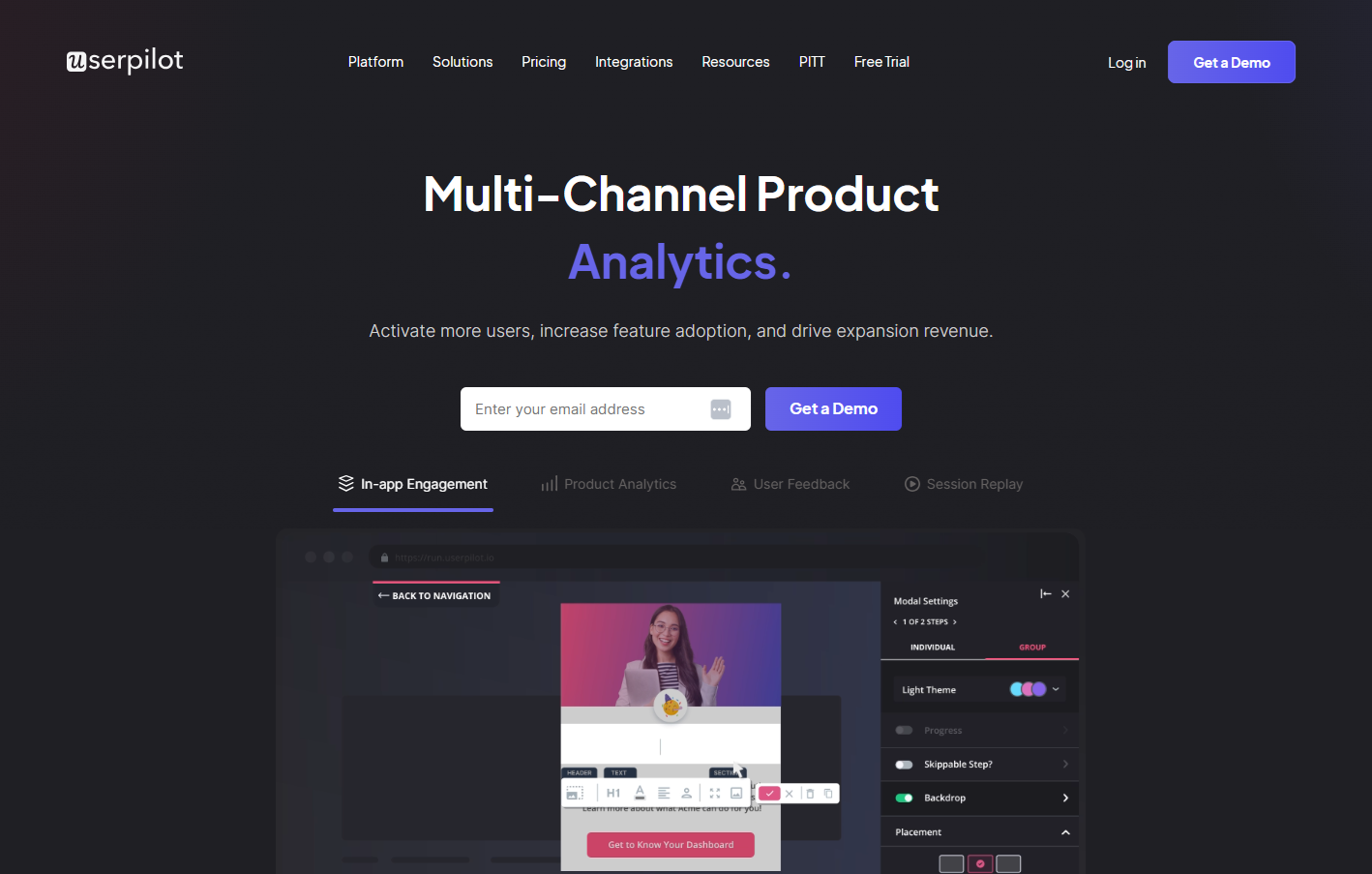
If you want a tool for guiding new users through products with contextual, personalized in-app experiences, Userpilot might be for you. It reduces time-to-value by helping users complete key actions and discover important features quickly.
With tools like product tours, interactive guides, and in-app messaging, Userpilot ensures customers know what to do at every step. The platform also tracks user behavior, captures feedback through microsurveys, and identifies areas where users struggle, allowing teams to adjust onboarding in real time.
2. Pendo
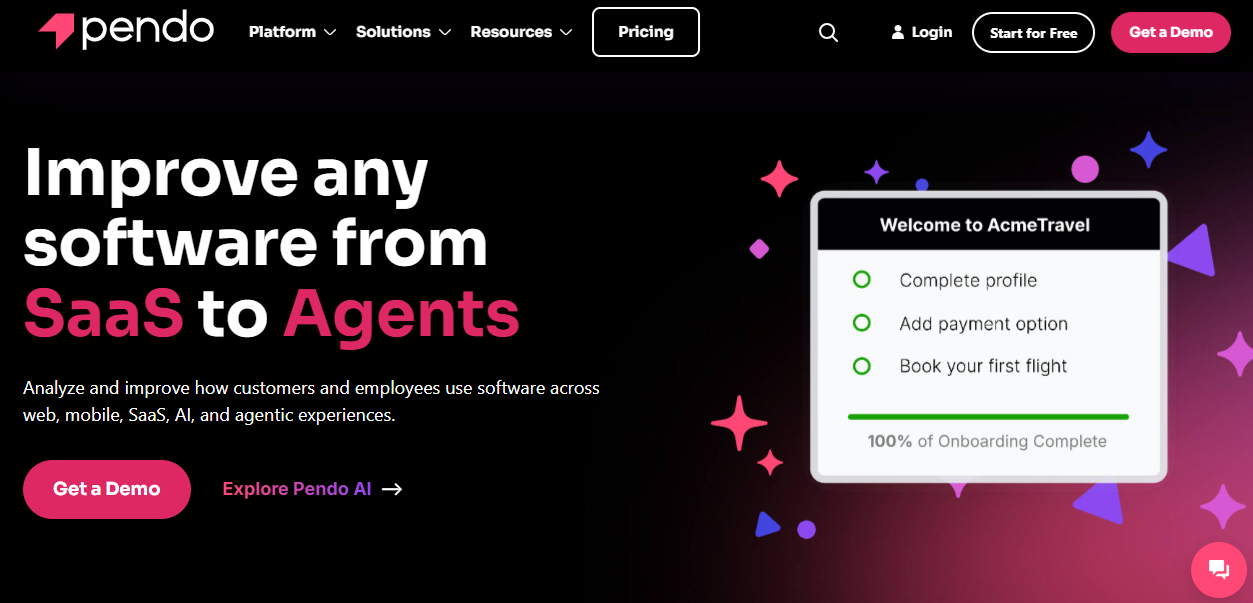
Pendo improves customer onboarding by combining product analytics, in-app guidance, and user feedback to create a seamless, personalized experience. Guides, walkthroughs, and banners allow users to navigate products, discover key features, and achieve early wins quickly. Session replay and behavioral analytics show how users interact, revealing friction points to optimize the journey.
Capturing sentiment and predicting churn enables timely intervention. By delivering the right message at the right moment, Pendo accelerates adoption, boosts engagement, and ensures customers realize value early, driving long-term retention and growth.
3. Flook
Flook makes customer onboarding easy and stress-free, even if your team doesn’t know a single line of code. You can use tooltips, onboarding tours, popups, banners, checklists, and slideouts to guide your users step by step, highlight important features, and make sure they complete the actions that matter most.
Tooltips and tours help people navigate your app quickly, while checklists and slideouts keep them on track. Event, URL, or API-triggered popups and banners deliver helpful info exactly when it’s needed.
4. Appcues
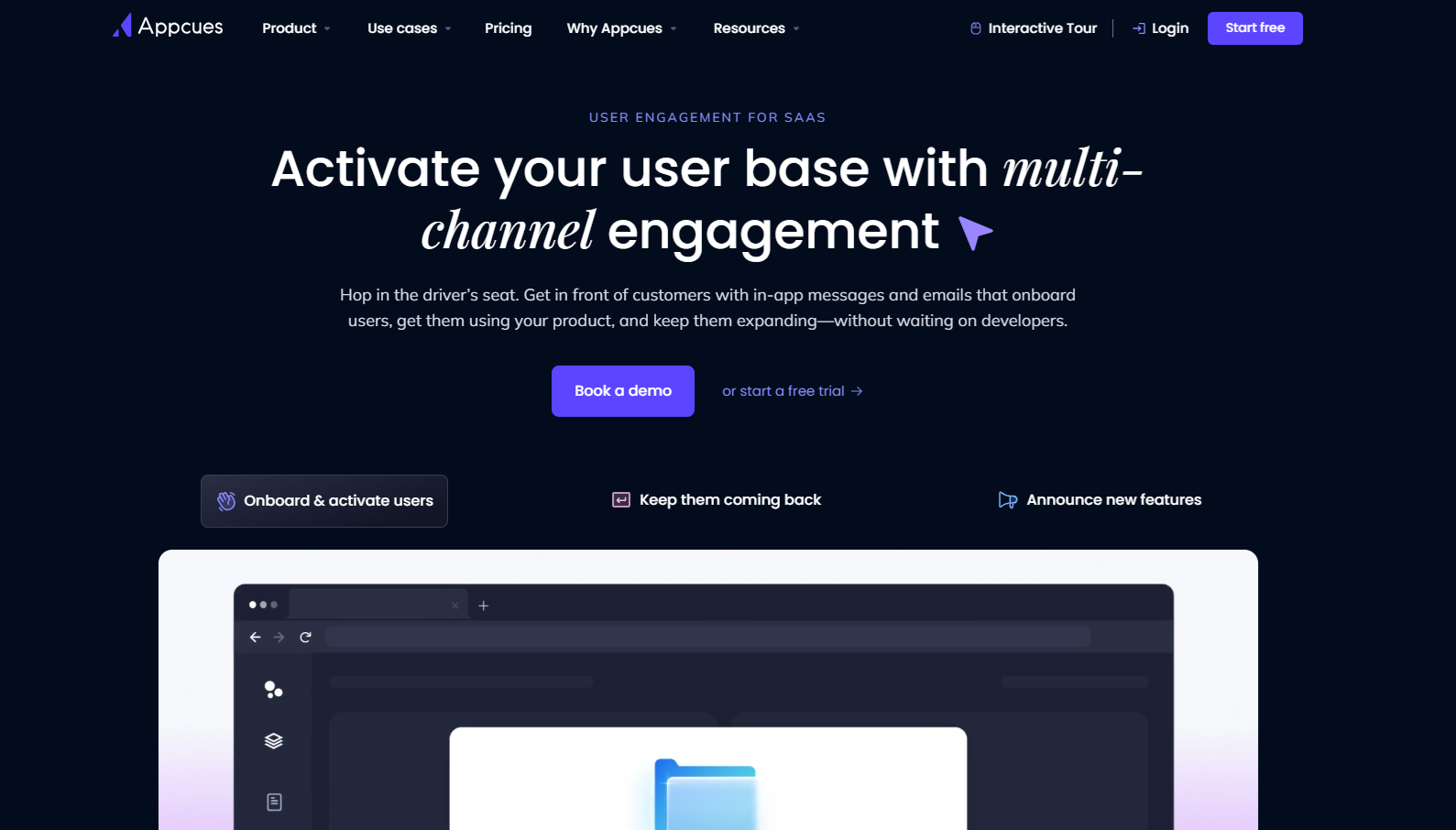
Appcues helps teams onboard customers by delivering personalized in-app, email, and push experiences that respond to user behavior. It guides users to their first success, highlights the next steps, and makes every milestone feel like progress.
By continuously tracking behavior, Appcues identifies who is thriving or struggling, then delivers the right message at the right time. Non-technical teams can quickly build experiences that boost adoption, engagement, and retention, while its AI-powered engine learns and improves with each interaction. Appcues makes onboarding smarter, faster, and more effective for every user.
FAQs
What is the purpose of customer onboarding, and why is it important?
The purpose of customer onboarding is to help new customers successfully start using a product or service. It’s important because it reduces confusion, speeds up time to value, and increases retention by ensuring customers quickly understand the benefits.
How long should an effective onboarding process take?
It depends on the complexity of the product or service and the customer’s goals. Simple products may require only a few minutes or hours, while more complex solutions can take several days or weeks to fully onboard users.
What are the most common mistakes businesses make during onboarding?
Common onboarding mistakes include overwhelming customers with too much information, failing to show value early, lacking clear guidance, poor communication, and not tracking customer progress. These issues can create confusion, slow adoption, and increase the risk of early churn.
How can I personalize onboarding for different types of customers?
Personalize onboarding by segmenting customers based on factors like industry, goals, company size, role, or use case. This allows you to tailor messaging, highlight relevant features, and guide each customer through steps that match their specific needs.
What tools or techniques can help reduce friction during onboarding?
Tools like onboarding checklists, guided product tours, tooltips, and automated welcome messages can reduce friction during onboarding. Platforms such as Flook let teams quickly create tooltips, onboarding tours, popups, and checklists that guide users step by step, helping them complete key tasks and understand the product faster.
How do I measure the success of my customer onboarding process?
Measure onboarding success using metrics like onboarding completion rate, time to first value, product adoption, and early retention. Customer satisfaction scores, feedback surveys, and reduced support tickets can also indicate whether new users are successfully learning and adopting your product.
Fix your onboarding without asking developers for help. Try Flook, a simple, no-code solution for onboarding progress bars, checklists, pop-ups, and more.